World Financial institution Removes Pakistan From South Asia And Locations It In The Center East-North Africa Bloc – Evaluation – Eurasia Assessment

Key Takeaways:
- The World Bank moved Pakistan from its South Asia grouping into the new MENAAP region in mid-2025, reflecting Islamabad’s deepening economic and strategic ties with the Gulf, Iran and Türkiye—including large remittance flows, LNG imports and membership in the Mecca Pact—while South Asia was reduced to India and five smaller neighbours.
- In June 2026 the United States dropped “Indo” from the Indo-Pacific Command title and earlier appointed Sergio Gor as ambassador to India with a concurrent South-and-Central-Asia envoy role, signalling both deteriorating India-US relations and a reduced American emphasis on India as a counterweight to China.
- The article presents these reclassifications as markers of a broader geopolitical realignment in which Pakistan’s centre of gravity has shifted toward the Middle East and Washington’s Indo-Pacific framing has narrowed.
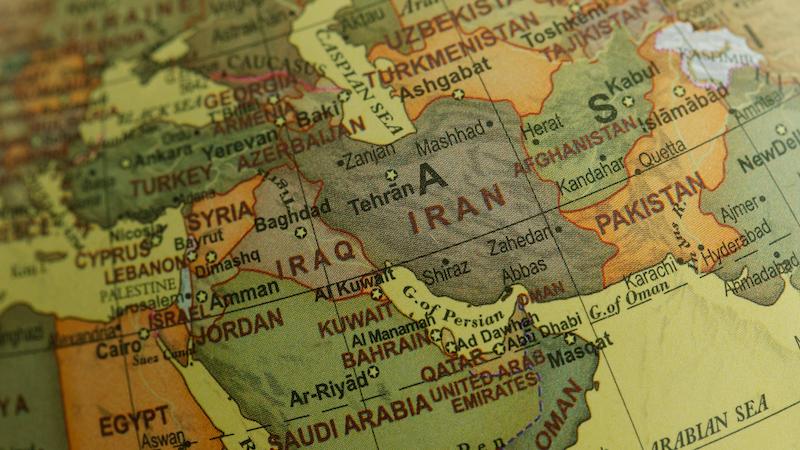
The World Bank has removed Pakistan from the South Asia region and placed it in the Middle East, North Africa, Afghanistan and Pakistan (MENAAP) region. The South Asia region now comprises only India, Bangladesh, Sri Lanka, Nepal, Bhutan and the Maldives. The change, which took effect in mid-2025, went largely unnoticed.
In August 2025, US President Donald Trump announced on Truth Social that he was appointing his close aide, Sergio Gor, as the next US Ambassador to India and Special Envoy for South and Central Asian Affairs. Given India’s long-standing sensitivity about being clubbed together (or “hyphenated”) with Pakistan, this was unwelcome in New Delhi.
In June 2026, the US renamed its “Indo-Pacific Command” as the “Pacific Command”, removing “Indo” from the title. The change in nomenclature was clearly more than administrative; it carried deeper geopolitical significance.
These reclassifications reflected the emerging geopolitical landscape across the Middle East, South Asia and the Indo-Pacific over the past year. They stemmed from shifts in the distribution of power and the Western world’s changing interests.
World Bank’s Classification
The World Bank’s decision to shift Pakistan from South Asia to the Middle East followed Pakistan’s tilt in foreign policy towards the Middle East, principally towards Iran, Saudi Arabia and Türkiye.
Islamabad had joined the US in its bid to secure a deal with Iran to end the war. Pakistan receives substantial aid from Saudi Arabia and armaments from Türkiye. On top of this, Pakistan is now a key partner in the political-military “Mecca Pact” with Saudi Arabia and Türkiye.
Over the years, Pakistan has loosened its ties with the rest of South Asia. It now has very little trade, economic relations or people-to-people contact with any country in the region. Lately it has made tentative attempts to build bridges with post-Hasina Bangladesh, but these remain minimal.
SAARC, to which Pakistan still belongs, remains inactive because of the India-Pakistan conflict over Kashmir. If South Asia remains relevant for Pakistan today, it is primarily because of that conflict. Pakistan’s civil and military leadership is fully engaged in cultivating ties with the US and the Middle Eastern Islamic regimes while keeping its relationship with China intact.
World Bank’s Reasons for the Shift
The World Bank may explain the reclassification of Pakistan as an analytical imperative. Pakistan’s economic and strategic centre of gravity has shifted towards the Middle East. It shares development challenges, economic structures and governance patterns with countries in that region. The reclassification therefore facilitates more meaningful research, lending programmes and policy advice.
According to Dr Aishwarya Sanjukta Roy Proma of Rajshahi University, Bangladesh, Pakistan received US$38.3 billion in remittances from the Middle East in fiscal year 2025 — a figure that exceeded its entire IMF loan programme and represented a 27 per cent increase over the previous year. More than half of these remittances came from the Gulf Cooperation Council (GCC) states. Saudi Arabia alone sent $739.6 million in January 2026, while the UAE sent $694.2 million in the same month.
Remittances are now Pakistan’s single largest non-debt external inflow. Pakistan imports liquefied natural gas from Qatar and has structured its industrial policy around investment from Gulf sovereign wealth funds, Dr Roy Proma notes.
Economist Muhammad Usman Hashmi observes that the World Bank’s shift reflects structural economic similarities among the MENAAP countries. In this group, the working-age population of 380 million is projected to grow by 40 per cent over the next 25 years. Yet economic growth across the region remains insufficient to generate adequate employment for this expansion.
Pakistan now shares with MENA economies high demographic pressures, conflict exposure, labour-market strains and a lack of private-sector dynamism.
Pakistan is currently negotiating a US$40 billion Country Partnership Framework with the World Bank for fiscal years 2026 through 2035, centred on human-capital development, private-sector growth and economic resilience.
Pakistan’s Historical Links with the Middle East
Historically, Pakistan has maintained a Middle Eastern orientation. In the 1950s it became part of the US-led Central Treaty Organisation (CENTO), a politico-military grouping of Islamic nations intended to resist the Communist USSR. Ties with the Islamic world deepened during the 1970s under Prime Minister Zulfikar Ali Bhutto, when Gulf labour migration began and Pakistan became a significant exporter of construction and service workers to Saudi Arabia and the UAE.
These ties deepened further under President Zia-ul-Haq in the 1980s, when Pakistan’s role as a frontline state in the Afghan jihad made it structurally dependent on Gulf financing and American military assistance. In 2013 the IMF created a new grouping, MENAP (Middle East, North Africa, Afghanistan and Pakistan).
Dropping “Indo” from Indo-Pacific
In June 2026 the Pentagon decided to drop “Indo” from the title of the Indo-Pacific Command (USINDOPACOM). Though described as a housekeeping matter, the change revealed the impact of strategic realities and shifting US interests in the Indian and Pacific Ocean region.
In 2018, during President Trump’s first term, Defence Secretary James Mattis had announced that the “Pacific Command” would henceforth be known as the “US Indo-Pacific Command”. This reflected a profound shift in American strategic thinking. By inserting “Indo” into the title, Washington formally acknowledged that the Indian and Pacific Oceans formed a single, interconnected strategic theatre — hosting trade routes, supply chains, naval deployments and geopolitical competition between the US and China.
The inclusion of “Indo” also recognised India’s growing importance in American foreign policy and defence planning vis-à-vis their common rival, China. Both countries opposed China’s Belt and Road Initiative (BRI), which they viewed as an instrument to extend Chinese hegemony. The term Indo-Pacific also fitted neatly into the US-led Quadrilateral Security Dialogue (QUAD), comprising the US, Japan, Australia and India, and aimed at containing China.
Meanwhile, a view had taken hold in Washington — reflected in an article by Dr Ashley Tellis in Foreign Affairs — that India was insufficiently accommodative to the US despite receiving significant assistance in critical sectors.
Sergio Gor’s Appointment
Days before he imposed a 50 per cent tariff on Indian exports in August, President Trump announced that his close aide and MAGA loyalist, Sergio Gor, would be the next Ambassador to India and also Special Envoy for South and Central Asian Affairs.
Indian commentators made no secret of their unease. Concurrent accreditation was not considered normal, particularly when India and Pakistan were effectively clubbed together. It is worth recalling that when President Obama appointed Richard Holbrooke as Special Envoy for the Afghanistan-Pakistan (Af-Pak) region, New Delhi objected strongly to any inclusion of India in Holbrooke’s brief. Holbrooke was known to believe that a solution to Afghanistan-Pakistan tensions could also lead to a settlement of the Kashmir issue. New Delhi put its foot down and ensured that India was kept out of his portfolio.
In contrast to the firm stance taken over Holbrooke’s appointment, New Delhi has taken Sergio Gor’s multiple designation in its stride. Currently it is in no position to challenge the US.
Be that as it may, US analyst Michael Kugelman has argued that New Delhi should welcome the arrangement. By posting the Special Envoy for two key regions in New Delhi rather than another capital, Trump may well be signalling the importance he attaches to ties with India.
Source: www.eurasiareview.com